Posts filed under ‘Uncategorized’
July Announcement for the Utah Westerners
“An Evening in Historic Corinne, Utah”
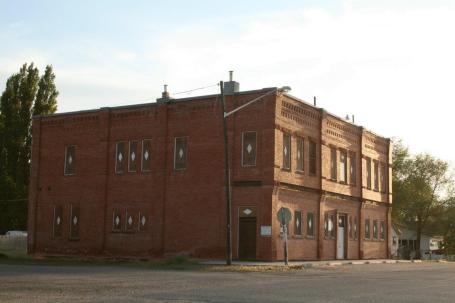 Evening will include:
Presentation on bus ride to Corinne: Ken Cannon: “The Corinnethians: Corinne’s Territorial Championship Baseball Club, 1870.”
Tours of: Corinne Masonic Lodge No. 5 F. & A. M. and Corinne Methodist Episcopal Church Oldest Existing Protestant Church building in Utah Dedicated September 20, 1870.
Presentation on the history of Corinne by: Dr. Richard W. Sadler Professor of History Past Dean, College of Social and Behavioral Sciences Weber State University.
May Announcement for the Utah Westerners
“Vigilante Justice: Fact, Myth and Modern Legacy”
Ellen Baumler
Montana’s early history is violent and controversial. Historians disagree over the motives of the Vigilance Committee that formed in December, 1863. That controversy will probably never be resolved, but there are historical documents and photographs that help us better understand the events of the early territorial period and their outcomes.
In preparation for the upcoming Montana adventure, historian Ellen Baumler will share some of the earliest photographs of Bannack, Virginia City and Helena and discuss the dynamics of these early gold camps. Central to the program is the important Masonic connection that stretches all the way back to Lewis and Clark, the theories behind the vigilante warning 3-7-77 (which appears on the modern badge of the Montana State Highway Patrol), and how Montana’s past has shaped its present.
Ellen Baumler received her PhD from the University of Kansas in medieval studies in English, classics and history. She has been an author, educator, and interpretive historian at the Montana Historical Society since 1992. She has composed hundreds of signs for Montana’s historic places, developed historic walking tours, and written National Register nominations. Ellen is an award winning author of eleven books and dozens of articles on many historical topics, hostess of the popular long-running radio show “History on the Go,” and a 2011 recipient of the Governor’s Award for the Humanities.
April Announcement for the Utah Westerners
THE DISEMBODIED WORD: MARIE OGDEN’S HOME OF TRUTH”
In 1933, Marie M. Ogden left the East Coast and drove full-throttle to Monticello, Utah, establishing her small spiritual commune on the rugged plains near Church Rock in San Juan County. Directed by a vision, Marie ventured out alone and settled on the arid desert plateau of Monticello at the height of the Great Depression, when the desert was a wild, parched place. With a small band of followers from New Jersey and Idaho, Marie built dwellings arranged in a series of “portals”, and named her settlement The Home of Truth. Despite the relative isolation of the group, Marie took a modern-pragmatic approach to proselytizing, purchasing the town’s only newspaper to become its editor-in-chief. The industrial print-press played an integral role in establishing and expanding The Home of Truth, and Marie’s writings preserve her legacy amidst the rich history of female spiritualists in the U.S.
Marie is a fascinating, stalwart individual, yet surprisingly, the Home of Truth is largely overlooked by histories of Depression-era metaphysical movements. This presentation reveals that Marie and her Home provide an ideal case study for examining the intersections of rural traditionalism and turn-of-the-century developments in science, medicine, and hermeneutics. With Marie at the forefront of this story, we uncover a riveting and modern tale of female transgression through radical spiritualism, and the ways in which language, through the act of writing, can hold the complexities of metaphysical thought and material practice.
Emma Kemp is a writer and video-artist from London, U.K., currently based in Los Angeles where she serves as faculty in Critical Studies at California Institute of the Arts. Her current research interests include the slime mold Physarum polycephalum; the phenomena of falling; the aesthetics of death; and proto-New Age communities of the West and Southwest. Her work has been exhibited across the U.S. and U.K., including at Sotheby’s and Tate Modern, London.
March Announcement for the Utah Westerners
“City in the World: Reinventing Zion
in Nineteenth Century Utah”
Thomas Carter
Thomas Carter is a University of Utah professor emeritus and author of the recently published book, Building Zion: The Material World of Mormon Settlement (University of Minnesota Press 2015). Dr. Carter will talk about the book, how it came into being, and why we should all read it. Many of you may know Tom. He worked in the early 1980s as an architectural historian for the Utah State Historic Preservation Office, and then moved to the U’s School of Architecture, where he taught architectural history and preservation until his retirement several years ago.
Tom is probably best known for his work with the vernacular/regional building traditions of Utah and other western states, and for the way he uses the built environment as a tool for doing history. For him, buildings are documents that can be read for meaning—that is, what people choose to build becomes an important sign of the kind of world in which they want to live. The process is archaeological in that it involves moving from artifacts back to the ideas that produced them, and historical in its reliance on written records to provide a contextual framework for interpretation. produced them, and historical in its reliance on written records to provide a contextual framework for interpretation.
In Building Zion, Carter argues that by looking at the physical Zion—the Zion that actually got built rather than the one people talked about building—we can learn a great deal about early Mormon cultural history. The lesson in the human landscape, he suggests, is rooted in a fundamental struggle between Zion as the “City on the Hill,” a perfected religious utopia, and a “City in the World,” a not-so-perfect place where the Saints could maintain their religion but also co-exist with their American neighbors. In the end, the latter course was chosen and in his book and in his illustrated talk to us, Tom will explain how this transformation occurred, and how it shaped the Utah we live in today.
February Announcement for the Utah Westerners
“Fallen Angels, Prostitution in the West.”
Michael Rutter
Somewhere between starvation and physical abuse, between venereal disease and suicide, between social alienation and depression, falls the woman of easy virtue. She might be a parlor courtesan, a dance hall girl in a saloon, or a streetwalker. Perhaps she was a painted lady in a working-man’s brothel, a hooker in a high-volume crib house—or the lowest of all, a whore at a “hog ranch.”
A few women joined the sisterhood to try and make big money; too many felt they had no other option. Sadly, little is known about the working girls in the American West. Society labeled them as fallen and did its best to sweep them under the table with other social misfits.
Michael Rutter is a writer/photographer who has published 50 books and hundreds of articles for magazines, journals, and newspapers.
He is a recipient of the Ben Franklin Book Award for Excellence and The Rocky Mountain Book Publishers’ Award. An “addicted” fly fisherman, his outdoor essays have been widely published (from Yale University to Outdoor Life). Michael has worked with American Experience on “The Wild West Series” and is interviewed in the A&E Documentary, Butch Cassidy and the Sundance Kid (Netflix, PBS). He has been a Christa McAuliffe Fellow and an AT&T Scholar. He currently consults with Qualtrics, co-authoring management training courses.
He spends summers wandering “west” of the Mississippi searching for stories and images—researching, digging into documents, photographing, tracking animals, and throwing copious amounts of fly line. He lives in Orem, Utah, with his wife, Shari, three cats, and a large, very spoiled, dog, a Turkish Akbash name Starrfish. He teaches advanced writing at Brigham Young University.
His book titles include: Boudoirs to Brothels: The Intimate World of Wild West Women; Upstairs Girls: Prostitution in the American West; Bedside Book of Bad Girls: Outlaw Women of the American West; Myths and Mysteries of the West; Wild Bunch Women; Outlaw Tales of Utah; Fly Fishing Made Easy; and Utah Off the Beaten Path. He is currently researching 19th century madams in Utah Territory for a new book.
January Announcement for the Utah Westerners
Utah’s Maverick Pioneer: From Hydroelectric
Power to Educational Reform with Lucien L. Nunn
Jackson Newell
Pushing against both social convention and technological boundaries, L.L. Nunn left enduring marks on our economic and social history. Driven by a dynamic conscience, this Progressive era hydroelectric power magnate went on to became a force to be reckoned with in labor relations, educational innovation, and social change. Working with Nikola Tesla and George Westinghouse, he built the world’s first commercial hydroelectric power plant for long-distance transmission of alternating current. He moved his industrial empire from Telluride, Colorado, to Utah in 1895 and quickly made his power plants here the world’s standard. In 1917, growing weary of the business exploits and weak from tuberculosis, he founded Deep Springs College in California. After nearly a century, the college thrives today as the most radical experiment in liberal education ever to succeed. In L.L. Nunn was inducted into the Alta Club in 1911.
Jackson Newell is professor emeritus at the University of Utah, where he also served as dean of Liberal Education from 1974 to 1990, and president emeritus of Deep Springs College (1995-2004). An authority on the history and philosophy of universities, he earned his Ph.D. degree at Ohio State University. His previous books include Matters of Conscience: Conversations with Sterling M. McMurrin on Philosophy, Education, and Religion, and Maverick Colleges: Fourteen Notable Experiments in American Undergraduate Education. Having received many teaching awards, he continues to teach in the Honors College at the University of Utah.
December Announcement for the Utah Westerners
“Hold to the Ironic Rod”
Robert Kirby
Robert Kirby has been making Salt Lake Tribune readers and others laugh and think for decades. His unique take on life and religion in Utah makes him a local treasure. Only Kirby could transform a uniquely Mormon metaphor like the iron rod into a presentation that makes it easier for everyone to live in our unusual society and culture.
Salt Lake Tribune humor columnist Robert Kirby was raised in a military family that moved to Utah in 1970. Following an LDS mission to South America, Kirby became a police officer.
After eleven years Kirby left law enforcement in 1989 to pursue the idiotic notion of becoming a writer. Robert has written for the Tribune since 1994. His culture column appears every Saturday, Sunday, and Tuesday, where it is closely followed by church and world leaders.
He is the author of 10 books, most recently “The Essential Kirby Canon.” The recipient of a number of literary awards, Kirby is most proud of being named grand marshal of the 2010 Green River Melon Days Parade. He is also the historian for the Utah Law Enforcement Memorial, and actively seeks out officers killed in the line of duty who have been forgotten.
Kirby lives in Herriman with one wife, three married daughters, nine grandchildren, and various dogs. There was a cat, but it died.
November Announcement for the Utah Westerners
“The Man Who Never Died: The Life and Legacy of Joe Hill after A century”
William M. Adler
William Adler provides the first reappraisal of the case of IWW songwriter Joe Hill in nearly a half century. Born in Sweden, and among the vast wave of immigrants that came to the United States in the late 19th century, Hill joined the IWW which advocated “One big Union.” As a “Wobbly,” he used his talents as a songwriter and cartoonist to further the organizations goals. Executed for the murder of a Salt Lake Grocer, which he denied, his case is still hotly debated. On the eve of his execution he urged his colleagues not to mourn but organize. Colorful, controversial and complicated, an examination of Hill’s life, the factors that brought him to the United States, and his contested execution tells us a great deal about the nature of organized labor in Utah and the West. And Adler’s solid research informs this important re-examination of the man and the case itself.
William M. Adler has written for many national and regional magazines, including Esquire, Rolling Stone, Mother Jones, and the Texas Observer. In addition to The Man Who Never Died, he has authored two other books of narrative nonfiction: Land of Opportunity (Atlantic Monthly Press, 1995), an intimate look at the rise and fall of a crack cocaine empire, and Mollie’s Job (Scribner, 2000), which follows the flight of a single factory job from the U.S. to Mexico over the course of fifty years. His work explores the intersection of individual lives and the larger forces of their times, and it describes the gap between American ideals and American realities. Adler lives with his wife and son in Denver, Colorado.
October Announcement for the Utah Westerners
“Joseph’s Temples: The Dynamic Relationship between Freemasonry and Mormonism”
Michael W. Homer
The apparent parallels between Mormon ritual and doctrine and those of Freemasonry have long been recognized. That Joseph Smith, Brigham Young, and other early church leaders were Masons is common knowledge. Yet while Mormon Masons openly acknowledged this connection, the question of influence was later dismissed and almost became taboo among faithful church members. Just as Mormons tried to downplay any ties to Freemasonry Utah Masons also sought to distance themselves from Mormonism.
In Joseph’s Temples, Mike reveals how deeply the currents of Freemasonry and Mormonism were entwined throughout Joseph Smith’s tenure as church president and how Masonry was part of his restoration imperative. He goes on to narrate the events that led to a complete chasm between the two institutions that continued after the Mormons settled in the Great Basin until a détente was achieved during the 1980s. Since that time, Mormons have once again become active Masons, become Masters of their lodges and even ascended to the Grand Master’s chair.
Michael W. Homer practices law in Salt Lake City. He was a member of the Board of State History (1997-2014) and served as chair (2002-2014). He is the Honorary Italian Consul in Utah (2008-Present) and is a member of the Utah Consular Corps. He is an award-winning author and has published numerous articles concerning law and history. He is the editor of On the Way to Somewhere Else: European Sojourners in the Mormon West, 1834–1930(Spokane: Arthur H. Clark Company, 2006), reprinted (Salt Lake City: University of Utah Press, 2010). His most recent book is Joseph’s Temples: The Dynamic Relationship Between Mormonism and Freemasonry (Salt Lake City: University of Utah Press, 2014).
September Announcement for the Utah Westerners
“Confessions of a Revisionist Historian:
David L. Bigler on the Mormons and the West”
David Bigler a charter member and the first president of Utah Westerners will be returning to Utah to make a special presentation to us on his eighth book: Confessions of a Revisionist Historian published by the University of Utah Library and Tanner Trust Fund. His latest book covers issues and events Bigler considers central to the understanding of Utah’s history: the California gold discovery journal of Azariah Smith, the Mormon Rebellion of 1857-58, Mormon-Indian relations, the 49ers and the Mormon Kingdom, the genesis of the Utah War, the massacre of Mountain Meadows and new light on the Aiken Party murders.
The book is the result of a session of the Mormon History Association that he attended in 2007 when a local history professor referred to him as a “revisionist historian.” David accepted the title gladly and wore it as a badge. “If ever there was a revisionist historian,” David said, “I’m it.” Moreover, he added, “if ever a chapter of our nation’s history needed revising, it is this one,” referring to the late nineteenth century story of the Mormons. In taking on this daunting task himself, “David has succeeded admirably,” reports Polly Aird, a noted historian herself, who will attend the September 15 meeting of Utah Westerners to hear his presentation.
David Bigler
David L. Bigler is a native of Provo, Utah, a U.S. Navy veteran of World War II and the Korean War. He graduated from the University of Utah in 1950. Southern Utah University awarded him an Honorary Doctor of Letters Degree in 1979. He is a Fellow and Honorary Life Member of the Utah State Historical Society; former director of the Utah Board of State History and Friends of University of Utah Libraries; and the former national president of the Oregon-California Trails Association. (OCTA). He has authored many important books including: The Gold Discovery Journal of Azariah Smith (1990); Forgotten Kingdom: The Mormon Theocracy in the American West, 1847-1896 (1998); A Winter with the Mormons: The 1852 Letters of Jotham Goodell (2001) and with Will Bagley The Mormon Rebellion: American’s First Civil War, 1857-1858 (2011). He retired as director of public affairs for U.S. Steel in 1986 to pursue history full time. He now resides in Sun City located in Roseville, California with his wife Evah.
 Utah Westerners
Recent Comments